The Devil Wears Dunkin'
Apparel is trading down while specialty coffee hits record highs. The cup has become the cheapest legible status object in America, and other foods should be taking notes.
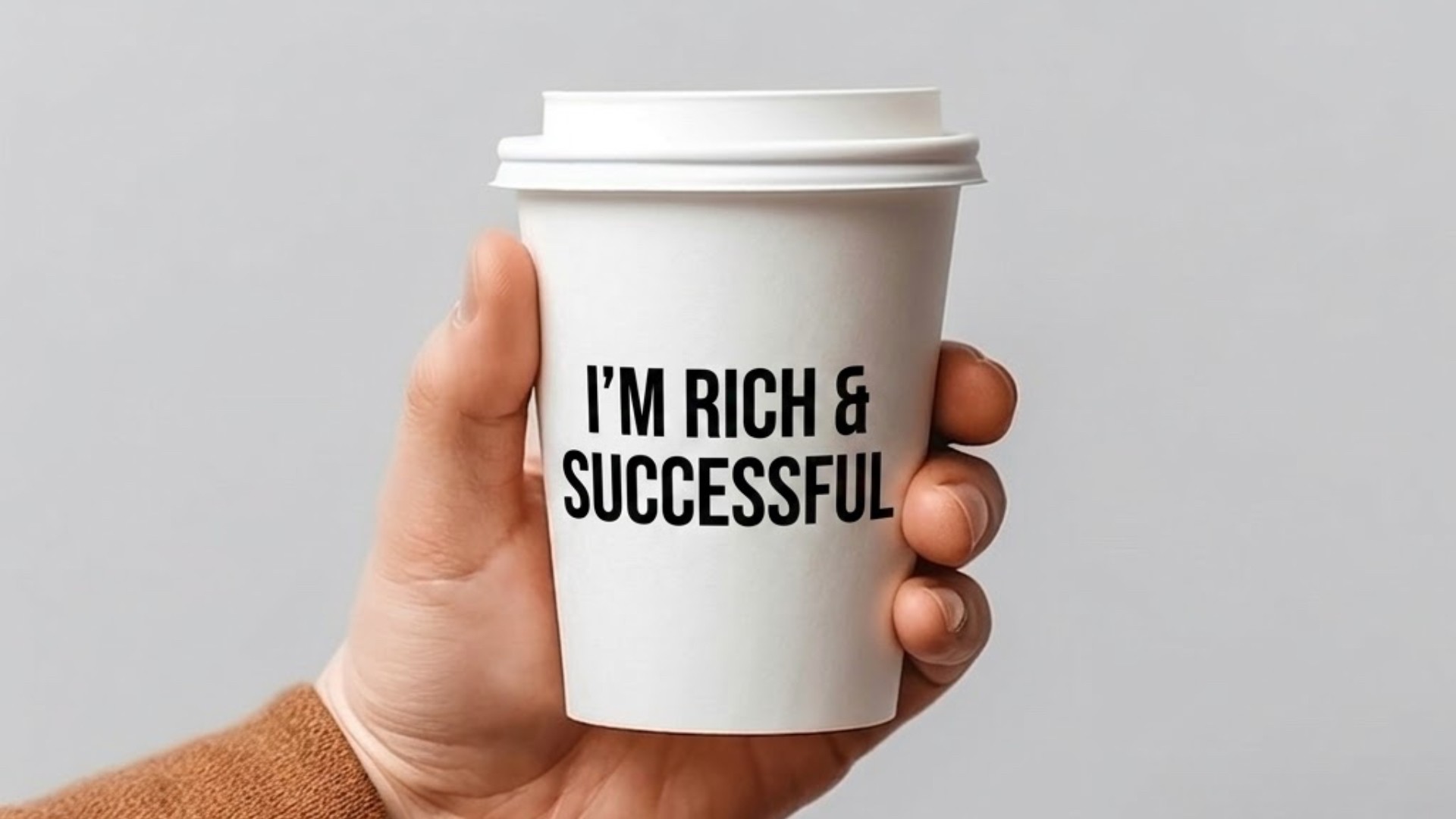
Nobody is looking at your handbag. They are absolutely looking at your cup. Walk through Silver Lake or Fort Greene or the South Loop on a Saturday morning and count the logos being carried at chest height: the Stumptown stamp, the mint of a Blank Street cup, the daft optimism of a LA LA Land Kind Cafe sleeve, the small independent roaster whose branding somebody in the neighbourhood is quietly proud to be seen with. These objects are carried exactly the way a bag is carried, held in the outward-facing hand, photographed, chosen with full awareness of what the choice announces, and dropped in a bin within the hour. Six dollars, two hundred times a year, and the wardrobe barely gets a look in. Coffee has become the most efficient identity purchase available to an American adult, and the category has hardly begun to understand what it is sitting on.
The consumption base underneath this is extraordinary. The National Coffee Association's 2026 data has sixty-six percent of American adults drinking coffee in the past day, ahead of bottled and tap water, tea, soda and juice, at around five hundred million cups a day. Specialty has overtaken traditional in past-day drinking, with forty-seven percent of adults having had a specialty coffee against forty-two percent for traditional. Consumption among eighteen to twenty-six year olds has grown by more than thirty percent since 2020, faster than any other group.
Set that against what is happening in the categories that used to own self-expression. Circana's read on American retail this year puts footwear and apparel under the heaviest pressure of any discretionary segment, with volumes falling and pricing compressing, and private label now accounting for roughly half of apparel sales revenue. Jewellery is doing better, largely because it raised prices more slowly than clothing and reads as a lasting purchase. Clothing, as a way of telling strangers who you are, has become simultaneously more expensive and less legible, because half of what is being bought carries a retailer's own label and says nothing at all.
Coffee walked into that gap holding four advantages that fashion cannot match.
Frequency, first. Somebody buys a jacket twice a year and a coffee two hundred times. Two hundred impressions is a media plan, not a purchase.
Portability, second. The cup travels through exactly the same public spaces a handbag does, at the same height, in the same photographs, on the same commute.
Price, third. A specialty coffee sits at a price point where identity costs five or six dollars and nobody has to think about it, at a moment when consumers have become, in the language of the retail analysts, calloused to high prices without being numb to them.
And place, fourth, which is the one fashion genuinely cannot answer. A roaster has a room. People sit in it. It has a smell and a soundtrack and regulars and a counter, and belonging to it is a real social fact rather than a claimed one.
There is a wrinkle in the data that looks like a contradiction and is actually the proof. Coffee shop visits have been falling. Roughly eighty-five percent of past-day coffee drinkers now prepare it at home, weekly coffee shop purchasing dropped sharply between 2024 and 2026, and one national survey this summer found Folgers overtaking Starbucks as the brand Americans most often named a favourite. The transaction is migrating to the kitchen while the brand affiliation stays out on the street. That is the signature of an accessory category. People buy the cheap version for daily use and the branded version for the version of themselves they show other people.
The operators who understand this are behaving like fashion houses, and it is worth watching how openly. Starbucks turned a viral plush bear into the opening act of a merchandise strategy, launched a standalone shop for coffee, merch and apparel, and has been working through collaborations with Farm Rio, Roller Rabbit, Zac Posen during New York Fashion Week and the streetwear label Dandy Worldwide. Dunkin' spent the summer on creator collaborations including Kylie Jenner and the apparel brand Parke, and independent tracking suggests preference among women moved several points in six months. In the other direction, CP Company built an entire capsule with Alessi around the Italian coffee ritual, borrowing from coffee rather than lending to it, which tells you where the cultural credit currently sits.
The risk in all of this is saturation, and it is arriving quickly. Food merchandise has become a summer sport, and most of it will be landfill with a logo on it. Merch works when it ratifies an identity that already exists and fails when it is asked to manufacture one, which is why a t-shirt from a roaster with four hundred regulars outperforms a t-shirt from a chain with four thousand locations. Culture cannot be reverse-engineered from a product line. It gets built in a room, over years, by people who were not thinking about apparel.
So what does this mean for other foodstuffs, which is the question a client should be asking. The formula is legible enough to copy deliberately. Daily frequency, a vessel or a form that is visible in public, a house style with real conviction behind it, and somewhere physical to belong to. Olive oil already has the bottle and the ritual and needs the room. Hot sauce has the table presence and needs the discipline. Tinned fish arrived with the design and is short on frequency. Matcha and yerba mate have all four and are moving fast. Bread has the strongest sense of place in food and the weakest sense of brand, which is either a failure or the largest available opportunity in the category.
The broader point is that identity spending has not disappeared from the American economy. It has moved down the price ladder and up the frequency curve, out of the wardrobe and into the hand. Food and drink brands that keep briefing themselves as consumables while their customers are wearing them are going to miss it entirely.
10 prompts to run at your marketing team
Our product is being carried in public a hundred and eighty times a year. Write the media plan that assumes we already own that inventory.
If our packaging were a garment, what would it cost, and would anyone buy it?
Name the three foods currently sold as ingredients that should be sold as accessories. Build one of them.
Our customers are buying the supermarket version at home and ours in public. What exactly are they paying the premium for, and is it in our brief?
Design the room our brand would live in. Now explain why we have never built it.
Fashion is trading down and half of apparel revenue is private label. What are we doing to take that identity spend, and why are we still calling ourselves a food company?
Write the merch drop we would be embarrassed by. What does the embarrassment tell us about the brand?
If a luxury house wanted to borrow our category's culture next season, what specifically would they take? If the answer is nothing, we have a problem.
Our logo will be photographed nine hundred times this week by people we have never met. Redesign it for that job rather than for a shelf.
Kill our loyalty programme and replace it with something people would want to be seen holding. Present both.