Screw the Logo, Make the Ingredients Bigger
A third of Americans now fact-check their health with a chatbot they don't fully trust. Your claims will survive legal review. The question is whether they survive that.
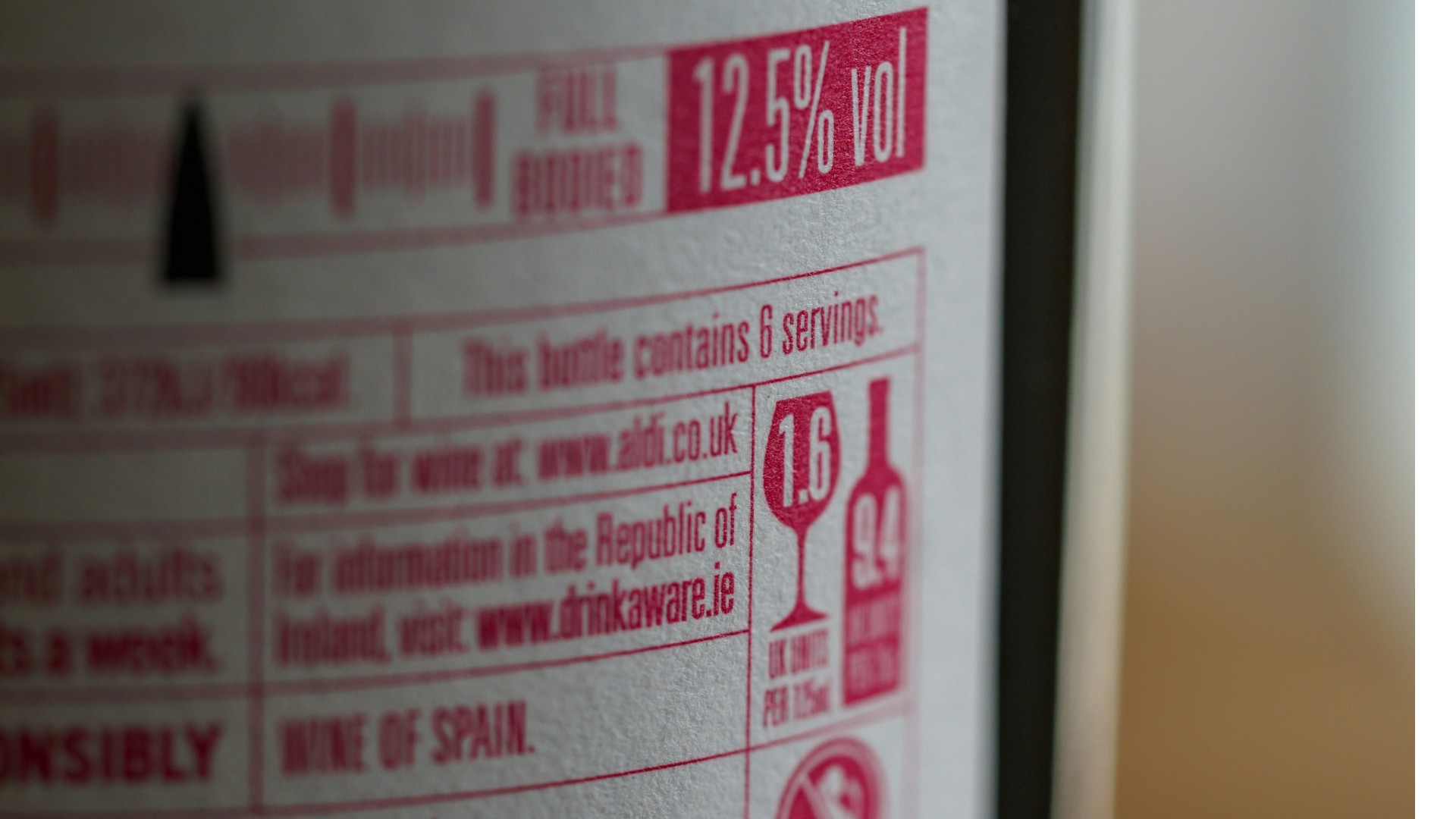
The most powerful health regulator in America is a woman in aisle four with a cracked phone screen and eleven seconds to spare. She lifts the jar to eye level, photographs the ingredient panel, sends the question off to a chatbot that answers with rather more confidence than the situation warrants, and then decides whether you get her money. She did not look at the front of the pack, because the front of the pack is where the lying happens. Nobody legislated this behaviour, nobody in marketing asked for it, and it has become the most consequential shift in health communication since pharmaceutical advertising was let onto American television. The identity system you spent two years refining is being skipped in favour of the six-point type on the back, which is a humbling thing to explain to a board.
The numbers have stopped being marginal. KFF's tracking poll this spring found roughly one in three adults turning to AI chatbots for health information, which puts the machines level with social media as a health source, and found that thirteen percent of the public has gone as far as uploading personal medical information into one. The West Health and Gallup research put a quarter of Americans in similar territory, and offered the detail that matters most, which is that more than half of recent users went to AI because they wanted to do their own research before or after seeing a doctor. Pew's work on health information sources supplies the twist. Only about eighteen percent of users rate chatbot health answers as extremely or very accurate, while nearly half describe them as very convenient.
Read that combination slowly, because it explains the decade ahead. Americans are running verification through a tool they do not entirely believe, on a subject where they cannot afford to be wrong, at a volume no brand has ever been audited at before. Fact checking has stopped being a conclusion people reach and has become a posture they adopt on the way in. The chatbot is not the oracle here. It is the second opinion that gets asked before the first opinion has finished speaking.
It would be lazy to pretend this happened without politics. Robert F. Kennedy Jr. and the Make America Healthy Again movement have done more to popularise ingredient scrutiny in eighteen months than three decades of nutrition campaigning managed. Some of what has come out of that movement aligns neatly with mainstream public health concern, which is why it travels. Roughly six in ten American adults live with at least one chronic condition, obesity affects more than forty percent of adults, and people were already suspicious of a food supply they felt had been designed for shelf life rather than for them. Other claims from the same source have been contested in public, at length, by scientists who were not going to let them stand.
Here is the part that gets missed, and it is the part health brands should be planning around. The loud, unresolved, nationally televised argument over what is true in health has taught ordinary people that health authority is arguable. That lesson does not stay where it was aimed. A public that has learned to interrogate a federal health department does not put the habit down when it reaches the supermarket. The Secretary's most startling statements have functioned, quite unintentionally, as a national training programme in scepticism, and the graduates of that programme are now standing in front of your packaging.
The commercial evidence is already visible. Innova Market Insights reports that thirty-seven percent of US consumers say they avoid artificial colourings, additives and preservatives, and colour ingredients under scrutiny turn up in almost half of American food and beverage launches that use colour at all. The federal phase-out of petroleum-based synthetic dyes rests on an understanding with manufacturers rather than a completed rule, and yet the market has moved anyway, because retailers and state legislatures moved faster than Washington. Texas now requires front-label disclosure of dozens of additives, and food service businesses cooking with seed oils have to say so where diners can see it. Mars reformulated M&M's without artificial colour and shipped the result missing brown and blue, because no natural alternative performed. That is what a live audit looks like from the inside of a supply chain.
Now the trap. In February the FDA issued a letter allowing manufacturers to claim no artificial colours as long as the product avoids petroleum-based synthetic dyes, even where an approved colour additive from a natural source is doing the work. Legally, that is a gift. Practically, it is a landmine, because the shopper photographing your panel is going to ask a machine what your colouring actually is, and the machine will tell them, and the distance between what you were permitted to say and what turns out to be the case is precisely the distance that gets screenshotted. Regulatory permission and public credibility have come apart, and only one of them shows up in your brand tracker.
So what should health brands actually do, given all this.
Publish the evidence rather than the conclusion. When somebody asks a language model about your product, the model reaches for structured, brand-managed material, which means your substantiation file is now a marketing asset rather than a legal archive. The clinical summary, the sourcing map, the reformulation timeline and the honest account of what you have not solved yet all belong in public, written to be read.
Write claims that survive interrogation rather than claims that survive review. The test is no longer whether a claim clears MLR. The test is whether it clears MLR and then holds up when a suspicious person with a chatbot spends four minutes on it.
Design for the person doing this out of fear rather than hostility. Pew found that uninsured Americans reach for AI health information more often than insured Americans, even accounting for age and income. These are people checking because a doctor's visit is expensive and a wrong purchase is money they do not have. That deserves generosity in the writing, not defensiveness.
And accept the shift for what it is. Trust used to be something a brand accumulated and then drew down. It is now something a brand re-earns at every point of contact, in front of an audience holding an instrument. At JK we think that lands on accountability more than on messaging, because the only durable answer to a nation of fact checkers is to be the brand that turns out to be right when they check.
10 prompts to run at your marketing team
Take our three most-used product claims. Argue against each of them as a hostile expert witness with full access to our own published data, then tell us which one collapses first.
Write the screenshot that ends our brand. Two hundred words, posted by a real customer, entirely factually accurate.
If a chatbot is now the most influential health adviser in America and nobody employs it, who exactly is our competitor?
Rewrite our pack copy for an audience that assumes we are lying and has ninety seconds to prove it.
Our legal team's job is to keep us out of court. Who in this company has the job of keeping us out of being technically correct and publicly humiliated?
Draft the substantiation page we would never publish, then explain what we are actually protecting by not publishing it.
Simulate a MAHA-aligned parent, a sceptical oncology nurse and an uninsured 26-year-old asking an LLM about our product. Where do the three answers diverge, and which divergence costs us most?
If the reformulation everyone is racing toward becomes table stakes by 2028, what will we be selling that cannot be reformulated by a competitor?
Write the apology we will issue in 2027. Now work backwards to the decision being made this quarter that causes it.
Name the one true thing about our product that we have never said out loud because it is inconvenient. Build the campaign that leads with it.